Author Archives: mattS

Remembering S.E.K Mqhayi, Imbongi ye Sizwe
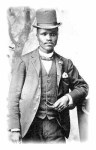
Known more commonly as S.E.K. Mqhayi, Samuel Edward Krune Loliwe Ngxekengxeke Mqhayi died July 29, 1945. Mqhayi was a Xhosa dramatist, essayist, critic, novelist, historian, biographer, translator and poet whose works are regarded as instrumental in standardising the grammar of isiXhosa and preserving the language in the 20th century. Xhosa is an ethnic group of people of Southern Africa mainly found in the Eastern and Western Cape, South Africa.
Among those who revered Mqhayi’s poetry was Nelson Mandela, who described him as the “poet laureate of the African people.” Mandela was proud that he had not only seen twice in person, but had on one occasion, heard Mqhayi recite his poetry.
Mqhayi’s addition of seven stanzas to “Nkosi Sikelel’ iAfrika”, which was originally written by Enoch Sontonga in 1927, was adopted by several African states as their national anthem including South Africa, Namibia and Zambia.
 In reading translations of some of Mqhayi’s work, I found “The Sinking of Mendi” a 1943 poem about the sinking of the SS Mendi during World War I after a collision which resulted in the deaths of 646 men. The dead were predominantly black South African troops from the 5th Battalion of the South African Native Labour Corps on their way to serve in France. Most had never seen the sea before this voyage, and very few could swim.
According to Alan Straton’s article ‘The Cold Sea: Mendi Poems’, “S.E.K Mqhayi who was the Imbongi ye Sizwe (National Bard) of the Xhosa people at the time of the First World War felt deeply about the disaster as he had played a formative role in the recruitment campaign through a poem that he wrote calling men to arms titled, ‘The Black Army’.” Mqhayi intended to keep the “memory of this event alive in the oral narrative of the Xhosa communities in the Eastern Cape during the Apartheid years when black historical events were written out of the history books.”
Oral histories passed down from survivors and witnesses tell that the men trapped aboard the ship as it listed and sank into the fog covered sea were calmed by the words of Isaac Williams Wauchope, an interpreter and former minister, who called out to them:
“Be quiet and calm, my countrymen. What is happening now is what you came to do…you are going to die, but that is what you came to do. Brothers, we are drilling the death drill. I, a Xhosa, say you are my brothers…Swazis, Pondos, Basotho…so let us die like brothers. We are the sons of Africa. Raise your war-cries, brothers, for though they made us leave our assegais in the kraal, our voices are left with our bodies.”
The captain of the boat that collided with the Mendi, which sailed away rather than offer aid to survivors, was later found to have been operating recklessly in the thick fog. As he was responsible for the deaths of 646 men, his license was revoked for one year.
Mqhayi also wrote to lament the westernization of Africa as he lived through the culmination and collapse of European colonization of the continent.
“Human movement in search of land grabbing land from chiefs.
Using the word of God as a tool
and instrument to rule kings and nations.
An education so inferior became an institution to prepare slaves
for new masters.”
He saw that the education the missionary schools provided was meant to erase his people’s history and prepare them only to be subjugated and enslaved by ignorance. He understood the importance of his cultural history and advocated for it though his poetry and prose.
Mqhayi ultimately hoped to inspire his people to future greatness by reminding them of all they have achieved in their cultural history, striving for “students of History to have a critical eye on the events that happened thousands of years ago, have a broader perspective of events around him and get armed for what is to happen tomorrow.”
For more on S.E.K. Mqhayi and the Sinking of the Mendi check out the links below.
https://www.poetryinternationalweb.net/pi/site/poem/item/13291/auto/0/SINKING-OF-THE-MENDI
http://mype.co.za/new/the-cold-sea-mendi-poems/88359/2017/06#ixzz5YUpFYJB0
http://museum.za.net/index.php?option=com_content&view=article&id=57:sek-mqhayi&catid=25&Itemid=168

Reading the Intentional and Not So Intentional Absurdity of Catch 22
I never had to read Joseph Heller’s “Catch 22” in high school but chances are if it had been assigned I wouldn’t probably wouldn’t have finished reading it. The novel is a too-long absurdist, occasionally funny, often sickening accurate and poignant, novel set during the Second World War, of a bunch of men screaming louder and louder because no one is listening them, while sexually assaulting most of Italy.

Weaving throughout the narrative exploration of a myriad of damaged soldiers is the emotional and psychological cost of toxic masculinity, on those wallowing in it as well as to everyone they come in contact with.
The greatest expression here of this cultural malignancy is the bureaucracy of war; whereas war is wage to provide a hierarchy for men to exploit one another, and that bureaucracy is then maintained to continue to wage a futile and pointless war that creates victims as much in those who are bombed as those who are bombing. Perhaps those who order the bombings can be said to be immune to the effects of this culture and the war it wages in reality, but they most certainly have a form letter explaining to “Mrs., Mr., Miss, or Mr. and Mrs. —” that it is they who are the real victims in all of this.
But I also have to wonder how the new Hulu adaption of the book will address the cultural and sexual shortcomings of the book in today’s Me Too and Time’s Up movements. Or will that charming and wistful reminiscing of the good old days when a fraternity gang raped two underage girls be excised entirely from the retelling?

It’s certainly a difficult book to read, and one difficult to say was enjoyed, despite the humorous moments. But for its stark, absurd illustration of the power of communication, miscommunication and misdirection to corrupt and damn, and the effects of war, of unchecked and unrestrained aggression it is an important story to experience. And one that, despite being dated in some aspects, is just as relevant today in the lessons that still need to be learned and the warnings to be gleaned.

June Reading Challenge from theUnreadShelf

That’s the easy part. Now I have to decide what to read for it. I’m not really into travel writing though, so finding something in my TBR pile that is a “place you’d love to visit or a travel-themed story” isn’t that easy. When I first went into the Libby app to search travel nonfiction audiobooks the first thing that popped up was Truman Capote’s “In Cold Blood”, proving even algorithms have a sense of humor. But I just read that a few weeks ago, so I can’t claim it for this challenge.

But now I don’t know, I’ve narrowed it down to a few, but I’m leaning towards John Banville’s “Time Pieces”, a memoir of his life in Dublin. I’ve been interested in reading Banville’s fiction, particularly his Benjamin Black series, so it jumped out at me. This book wasn’t on my TBR, but the author was, so that counts. Right?
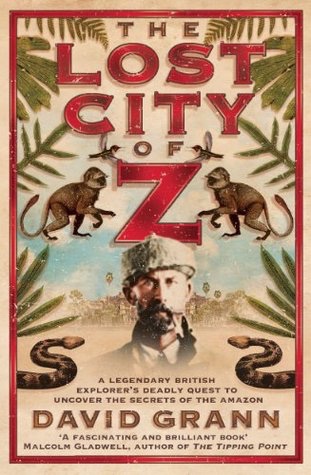
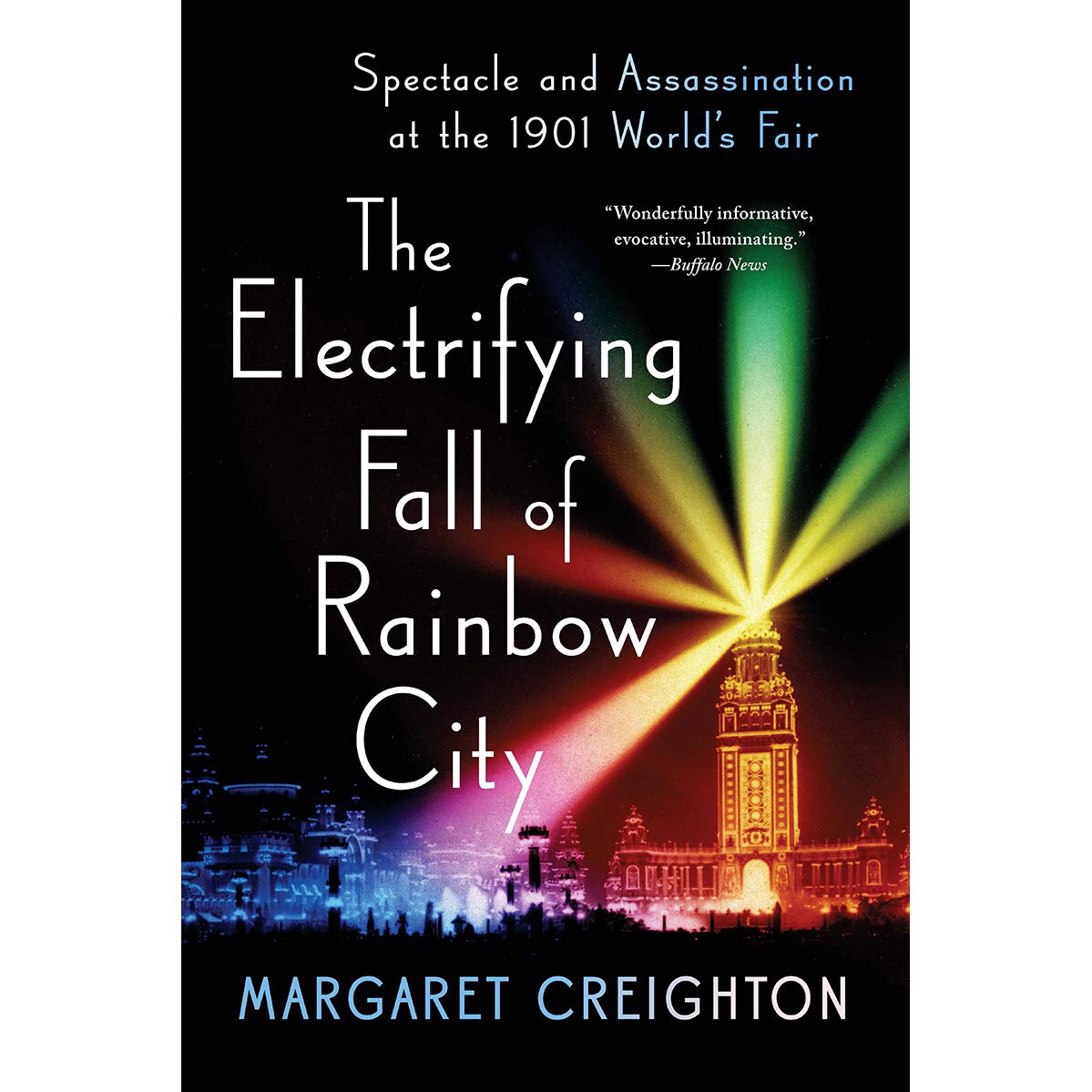
Runners up include “The Lost City of Z” and “Murder on the Orient Express”, both very much travel and travel themed books I’ve been meaning to read, even if they are both very morbid stories. Originally I’d thought I could read “The Electrifying Fall of Rainbow City” and travel to the Pan American Exposition of 1901 but that seemed to be playing a little loose with the rules. But it’s already on my loan shelf, so once I finish “Catch 22” it’s over to Dublin with John Banville for a few hours before heading into the spectacle and tragedy of 1901 in the Queen City.
Are you doing the UnreadShelf’s TBR Challenge, or any other reading challenge? What travel-themed books have you read or wanted to read?



 Gas Station Burrito