Blog Archives

Give a Good Read Week and Little Free Libraries
Give a Good Read Week runs through Sunday, September 22. Which book are you going to share?
In 2009, Todd Bol created the first Little Free Library book exchange in the front yard of his home in Hudson, Wisconsin as a tribute to his mother—a teacher.
 Ten years later there are more than 90,000 Little Free Library book exchanges in 91 countries, and all 50 U.S. states. There’s a good chance there’s one near you that you can donate to or browse. See if there’s one near you on this interactive map.
If you’ve always wanted to start your own Little Free Library, this is the perfect opportunity! Browse the ready-to-use libraries here, and blueprints for building your own library here. You can check out some of the incredibly creative libraries others have built here.
If you’re unable to install a Little Free Library near you, another option is the Impact Library Program, which provides no-cost Little Free Libraries to high-need communities throughout the U.S.
 Those prebuilt libraries can be a little pricey, even with the sales they’re running, but you could always pick up the new picture book instead. By Miranda Paul and John Parra, “Little Libraries, Big Heroes” tells the story of the organization’s history and goals, from the very first Little Free Library.
If you’re able to donate to a Little Free Library near you, (or find a great book you can’t resist) don’t forget to share a photo on social media tagging @goodreads and using the hashtags #GiveAGoodRead and #LFL10.
What book would you love to donate?

June Reading Challenge from theUnreadShelf
That’s the easy part. Now I have to decide what to read for it. I’m not really into travel writing though, so finding something in my TBR pile that is a “place you’d love to visit or a travel-themed story” isn’t that easy. When I first went into the Libby app to search travel nonfiction audiobooks the first thing that popped up was Truman Capote’s “In Cold Blood”, proving even algorithms have a sense of humor. But I just read that a few weeks ago, so I can’t claim it for this challenge.
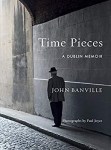
But now I don’t know, I’ve narrowed it down to a few, but I’m leaning towards John Banville’s “Time Pieces”, a memoir of his life in Dublin. I’ve been interested in reading Banville’s fiction, particularly his Benjamin Black series, so it jumped out at me. This book wasn’t on my TBR, but the author was, so that counts. Right?
Runners up include “The Lost City of Z” and “Murder on the Orient Express”, both very much travel and travel themed books I’ve been meaning to read, even if they are both very morbid stories. Originally I’d thought I could read “The Electrifying Fall of Rainbow City” and travel to the Pan American Exposition of 1901 but that seemed to be playing a little loose with the rules. But it’s already on my loan shelf, so once I finish “Catch 22” it’s over to Dublin with John Banville for a few hours before heading into the spectacle and tragedy of 1901 in the Queen City.
Are you doing the UnreadShelf’s TBR Challenge, or any other reading challenge? What travel-themed books have you read or wanted to read?


Struggling to Read “Lawrence in Arabia”
War, Deceit, Imperial Folly, and the Unbelievably Boring Start to the Story of How American Business Destroyed the World
 I’m currently listening to Scott Anderson’s “Lawrence in Arabia” through my Libby library audiobook app and it is remarkably unengaging.
I’m struggling. Would it be better to read rather than listen to it? I’m not sure if that would matter much—there is so much history and political maneuvering, so many individuals beyond the principle figures that are constantly being introduced and threaded into the convoluted history of European and American interference in the Middle East on the brink of war that I’m constantly listening to portions again but coming away not at all more sure of what is happening.
 At a quarter of the way through it still feels like an introduction. Although, as I write this, Anderson is now touching on the beginnings of the Armenian Genocide, the German spy who’s brother and nephew would both go on to be the first and seventh presidents of Israel, and the scathingly passive aggressive letters Lawrence sent his incredibly abusive mother regarding the death of his youngest brother, who was her favorite child.
So, one hopes I spoke too soon and the threads of crumbling empires at war, religious communities searching for political identities and oil-hungry corporations manipulating them all begin to tighten together into a more engaging narrative.


 Gas Station Burrito