Blog Archives

To Be Read | Sam Shepard’s ‘Spy of the First Person’
Reading the description for Sam Shepard’s posthumous short novel, “Spy of the First Person”, I’m immediately reminded of Paul Harding’s ‘Tinkers’, and C.S. Richardson’s ‘The End of the Alphabet’. Both novels feature main characters faced with their impending death, and forced to search their pasts and consider their limited futures for meaning and validation. Each goes about it in completely different yet equally beautiful ways and if you’ve read and enjoyed Shepard’s final book, I’d recommend checking both of those novels out.
How do you share the experience of dying? Of slowly losing control, not simply of your life, but of your body itself, and carry on knowing the end is bearing down on you? How does that change a person?

________________________________
From the Publisher:
“The final work from the Pulitzer Prize–winning writer, actor, and musician, drawn from his transformative last days
In searing, beautiful prose, Sam Shepard’s extraordinary narrative leaps off the page with its immediacy and power. It tells in a brilliant braid of voices the story of an unnamed narrator who traces, before our rapt eyes, his memories of work, adventure, and travel as he undergoes medical tests and treatments for a condition that is rendering him more and more dependent on the loved ones who are caring for him. The narrator’s memories and preoccupations often echo those of our current moment—for here are stories of immigration and community, inclusion and exclusion, suspicion and trust. But at the book’s core, and his, is family—his relationships with those he loved, and with the natural world around him. Vivid, haunting, and deeply moving, Spy of the First Person takes us from the sculpted gardens of a renowned clinic in Arizona to the blue waters surrounding Alcatraz, from a New Mexico border town to a condemned building on New York City’s Avenue C. It is an unflinching expression of the vulnerabilities that make us human—and an unbound celebration of family and life.”

The Obama Inheritance
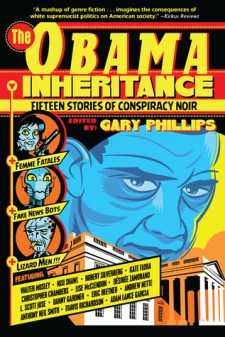 I heard about this crazy book at the tail end of an episode of NPR’s ‘Fresh Air’ and I almost missed out on it, since I thought it was going to be all ads loaded up at the end of the podcast.

Reading, “The Man in the High Castle”
“Work the sentences, if you wish, so that they will mean something. Or so that they mean nothing. Whichever you prefer.”
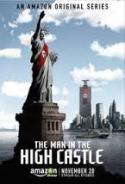 The limited previews I saw for the Amazon adaptation are what pushed my interest in “the Man in the High Castle” to the reading point. Is the show any good? I haven’t watched it yet, but I’m intrigued. Nazis! Alternate history! Episodic storytelling! DJ Qualls! Ok, maybe not necessarily DJ Qualls, but the Nazis and alternate history piqued my interest. Having read a few other Philip K. Dick novels and handful of short stories, I wanted to see what he would do with the few pieces I knew about.
The only way to explain how I felt reading ‘High Castle’, and I hope this makes sense, is to say nothing actually happened, but no one bothered to tell me.
Similar to other examples of Philip K. Dick I’ve read, there isn’t what you would normally call “world building” going on in his books. It’s more like “world immersion,” as if you wake up to this new reality and although you have no idea what or who anything is, you assume that’s how it has always been. Like laughing along with everyone else even though you don’t get the joke, you don’t freak out and try to understand what’s happening around you in this new reality. Instead, you keep reacting and moving and speaking, picking up clues and understanding things as you go, hoping no one else figures out that you have no idea what you’re doing.
In that regard, I suppose Dick’s writing is as close to real life as one can get, just with slightly more advanced technology that you still don’t know how to work.
 Sometimes this method works, such as in “Flow My Tears, the Policeman Said,” where that almost literally is the plot. It works a little less so for “Time Out of Joint,” but generally extremely well for his short stories and in “A Scanner Darkly.” You learn the necessary facts of this new reality as you go. The important details are made clear because you need them to survive. You learn by doing, by living. It’s a ‘take only what you need to survive’ sort of writing style.
This style is great, and I’ve loved it in the past, and it’s why I enjoy Dick’s books.But here, with this reality and these characters, it left me constantly waiting. We never really moved forward. While the characters were steadily doing things and interacting with each other and proving they knew on another and were all connected, it never felt like they were ever moving about in the same reality. They kept doing but never moving. Acting but never affecting.
But here, with this reality and these characters, it left me constantly waiting. We never really moved forward. While the characters were always doing things and interacting with each other and proving they knew one another and were all connected, it never felt like they were actually moving about in the same reality. They kept doing but never moving. Acting but never affecting.
I kept turning the page. They kept going through the motions. And we all kept waiting to see where we were going and whether it was worth it.
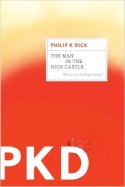 But even as these characters met their ends and found explanations and tried to understand what they had learned from what they’d done, there didn’t seem to be much of a point to it. I was left holding a book that was more an unfinished thought then fully formed novel. I didn’t grow into understanding the reality so I didn’t care about the people in it, which was ok because the same could be said for any of the characters in it as well.
While this won’t turn me off reading more Philip K. Dick, or even deter me from checking out the tv show, this wouldn’t be the first, third or even fifth book by him I recommend. Not when he much better-written novels and stories to chose from that successfully pull off his immersion style of writing.


 Gas Station Burrito